What started as a simple question—how can a trash bin help people separate waste correctly?—quickly revealed a much bigger challenge. With this self-initiated speculative design project, we explored the future of decentralized, on-site resource management. Instead of optimizing disposal, we designed a system that treats waste as a local resource—managed, processed, and reused where it is generated. The result: a realistic future scenario that reframes waste from an end-of-pipe problem into a design, data, and infrastructure challenge.
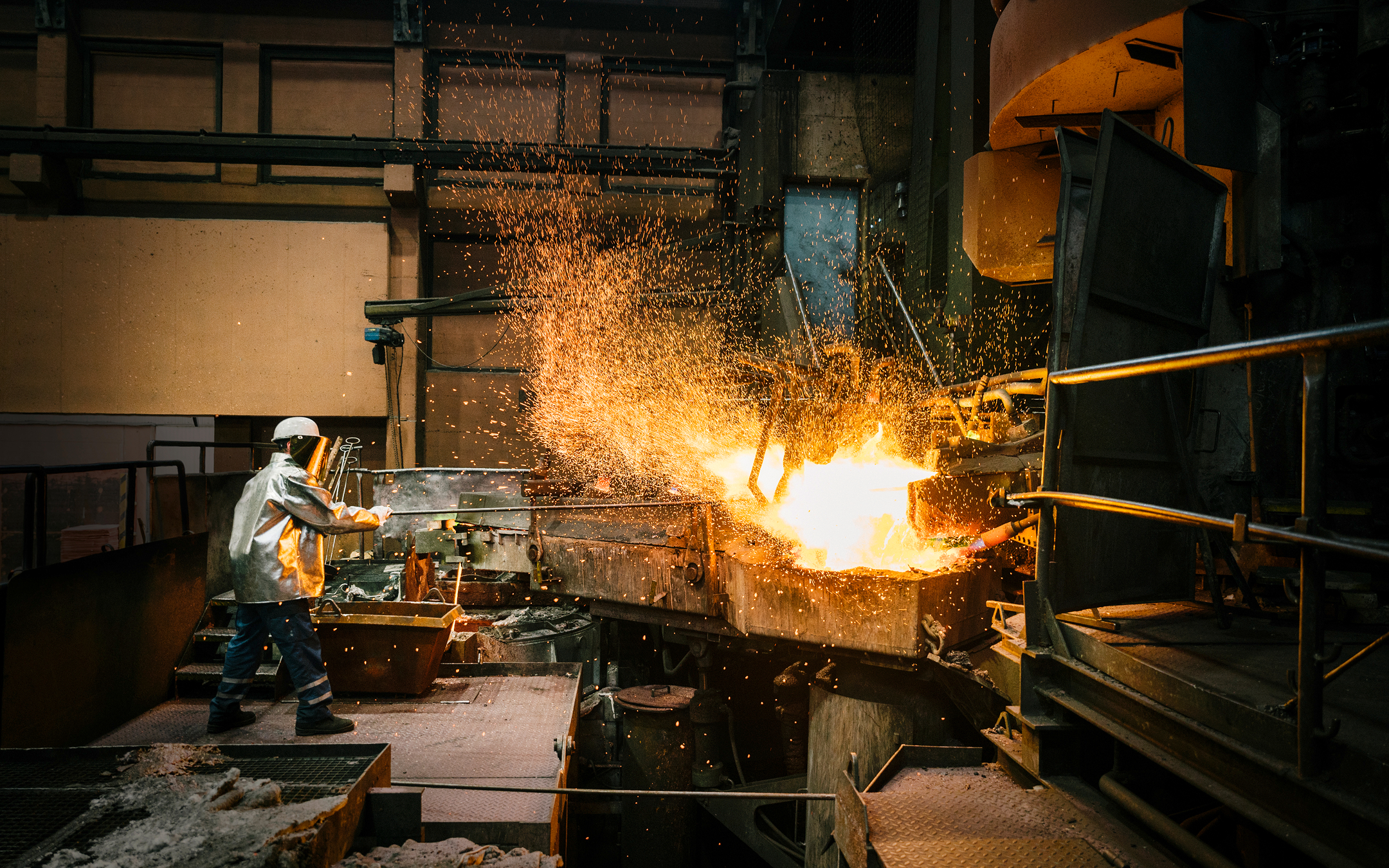
Waste management is still designed for removal, not reuse. In offices and shared spaces, valuable materials disappear into residual waste—out of sight, out of mind. Existing systems externalize responsibility, rely on centralized logistics, and leave users disconnected from the consequences of their behavior. Even well-intentioned people struggle to separate waste correctly, not because they don’t care, but because the system gives them no feedback, no visibility, and no agency. A better trash bin alone cannot fix a system built around disposal.
Problem
Waste management is still designed for removal, not reuse. In offices and shared spaces, valuable materials disappear into residual waste—out of sight, out of mind. Existing systems externalize responsibility, rely on centralized logistics, and leave users disconnected from the consequences of their behavior. Even well-intentioned people struggle to separate waste correctly, not because they don’t care, but because the system gives them no feedback, no visibility, and no agency. A better trash bin alone cannot fix a system built around disposal.
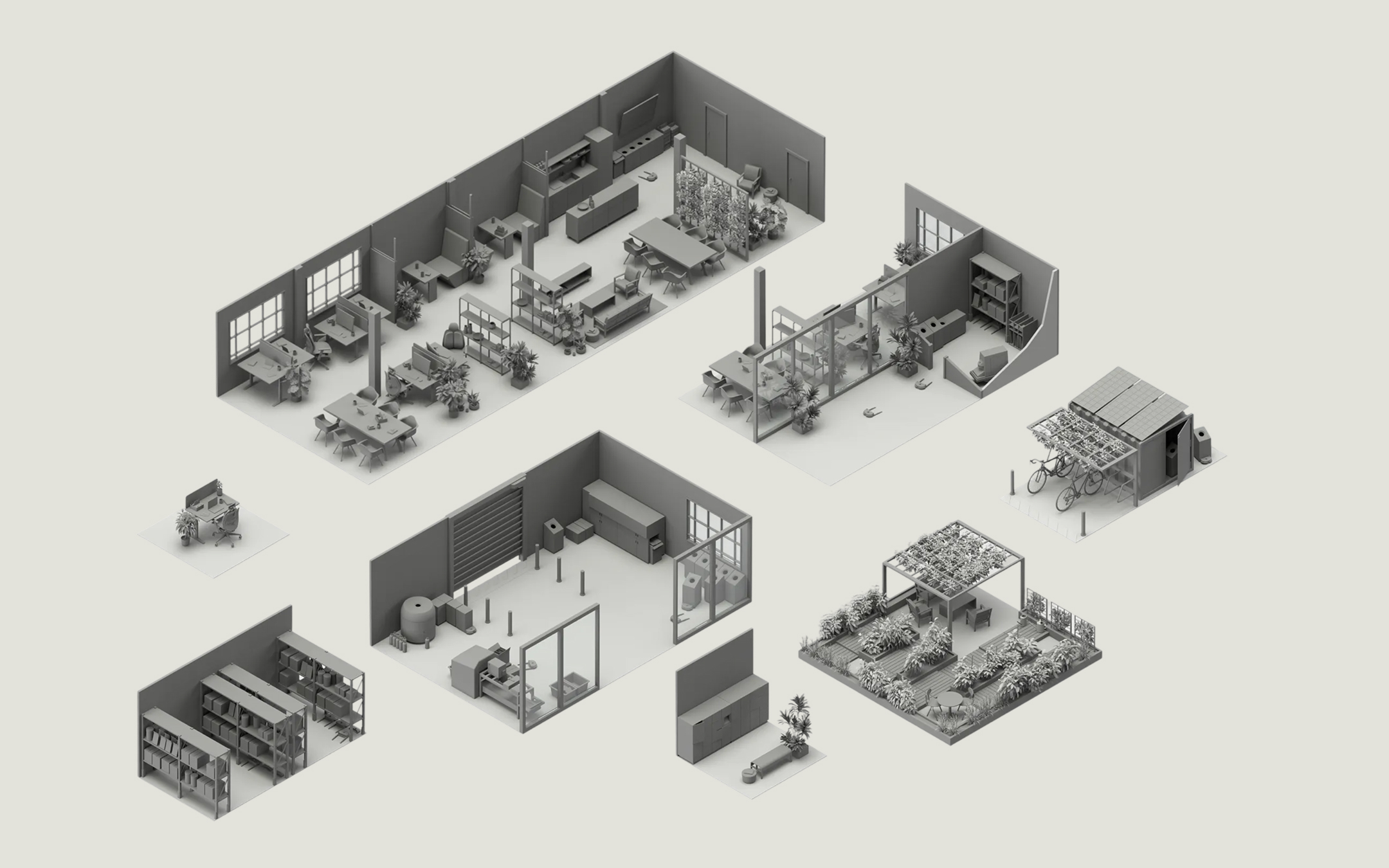
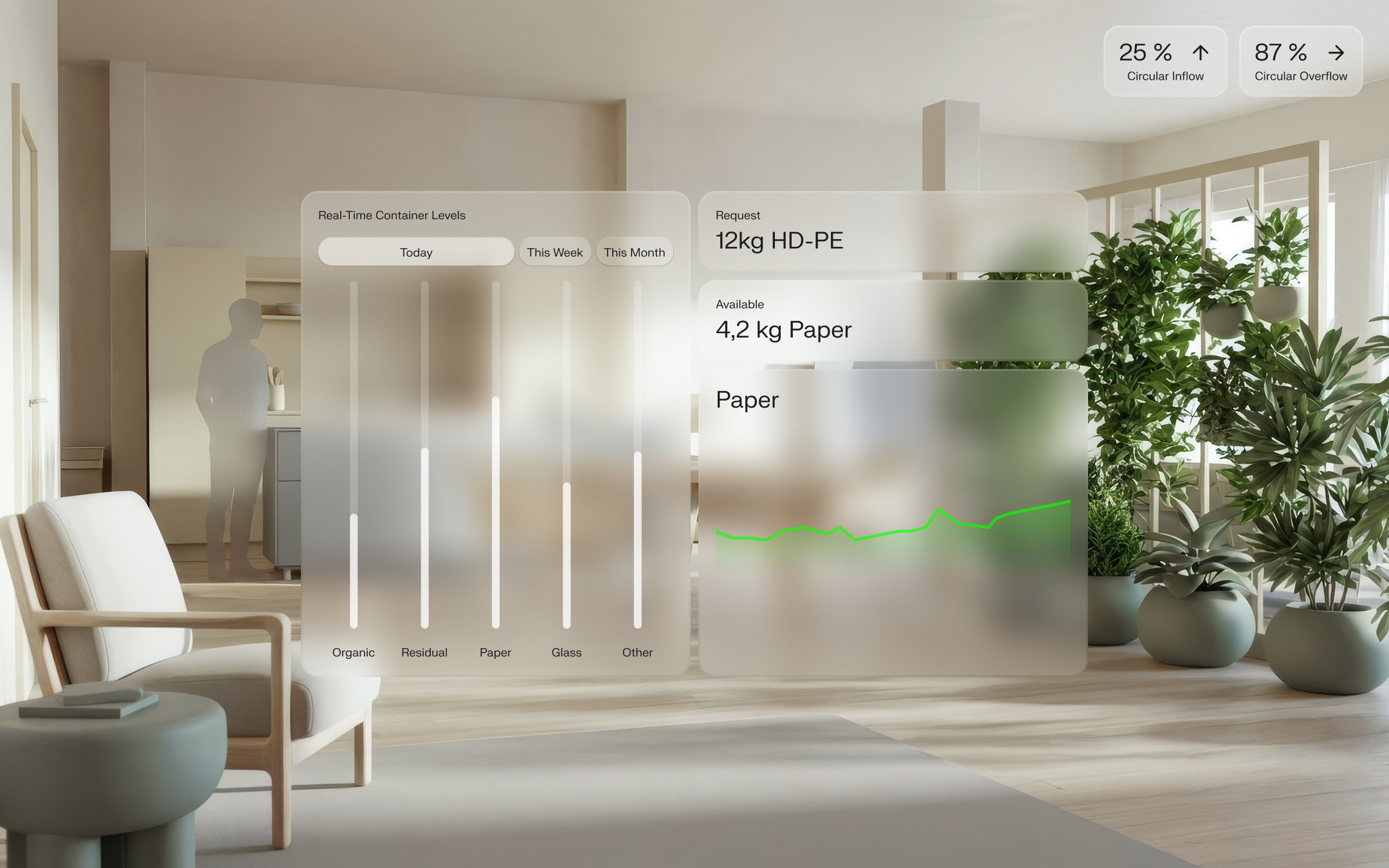
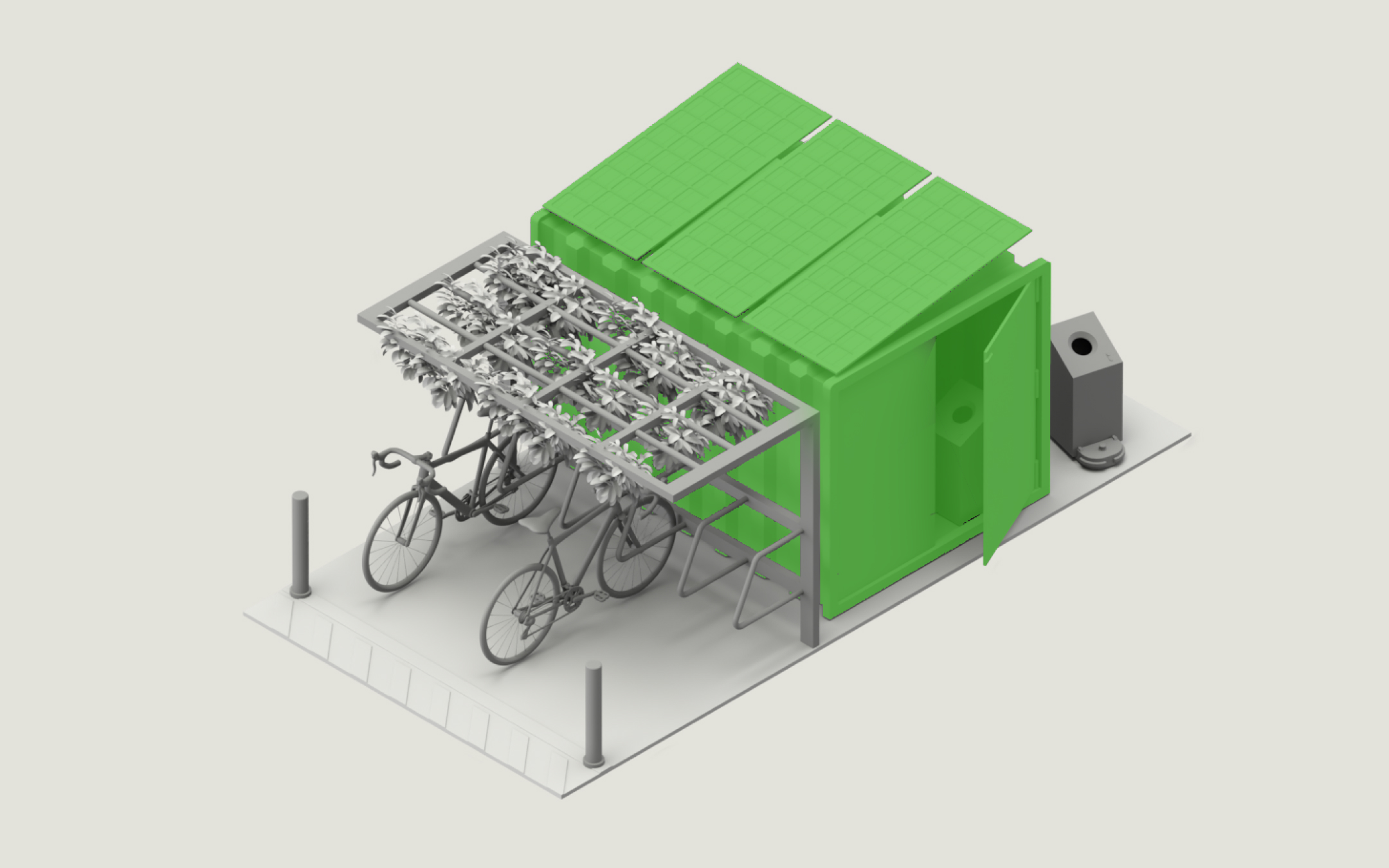
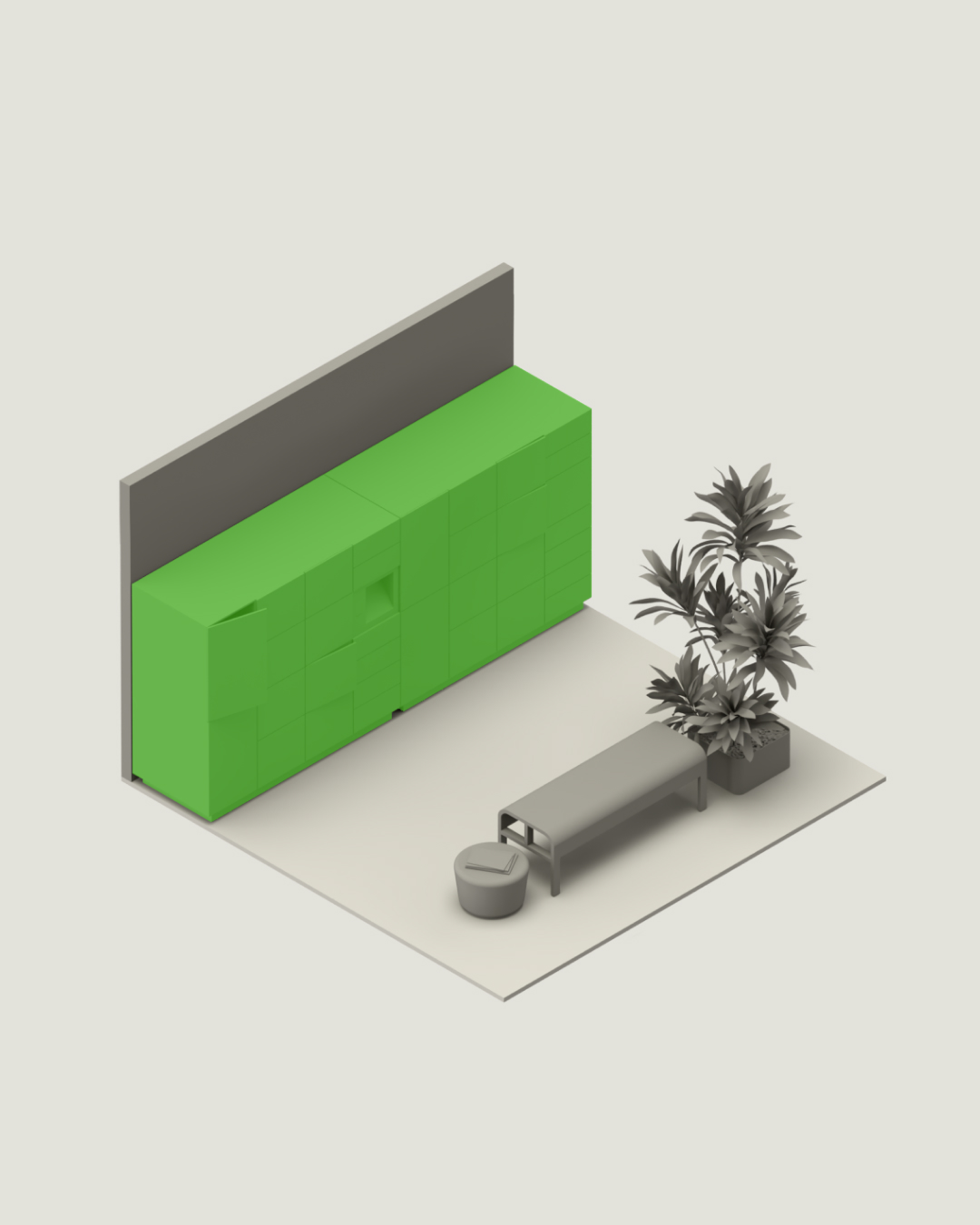
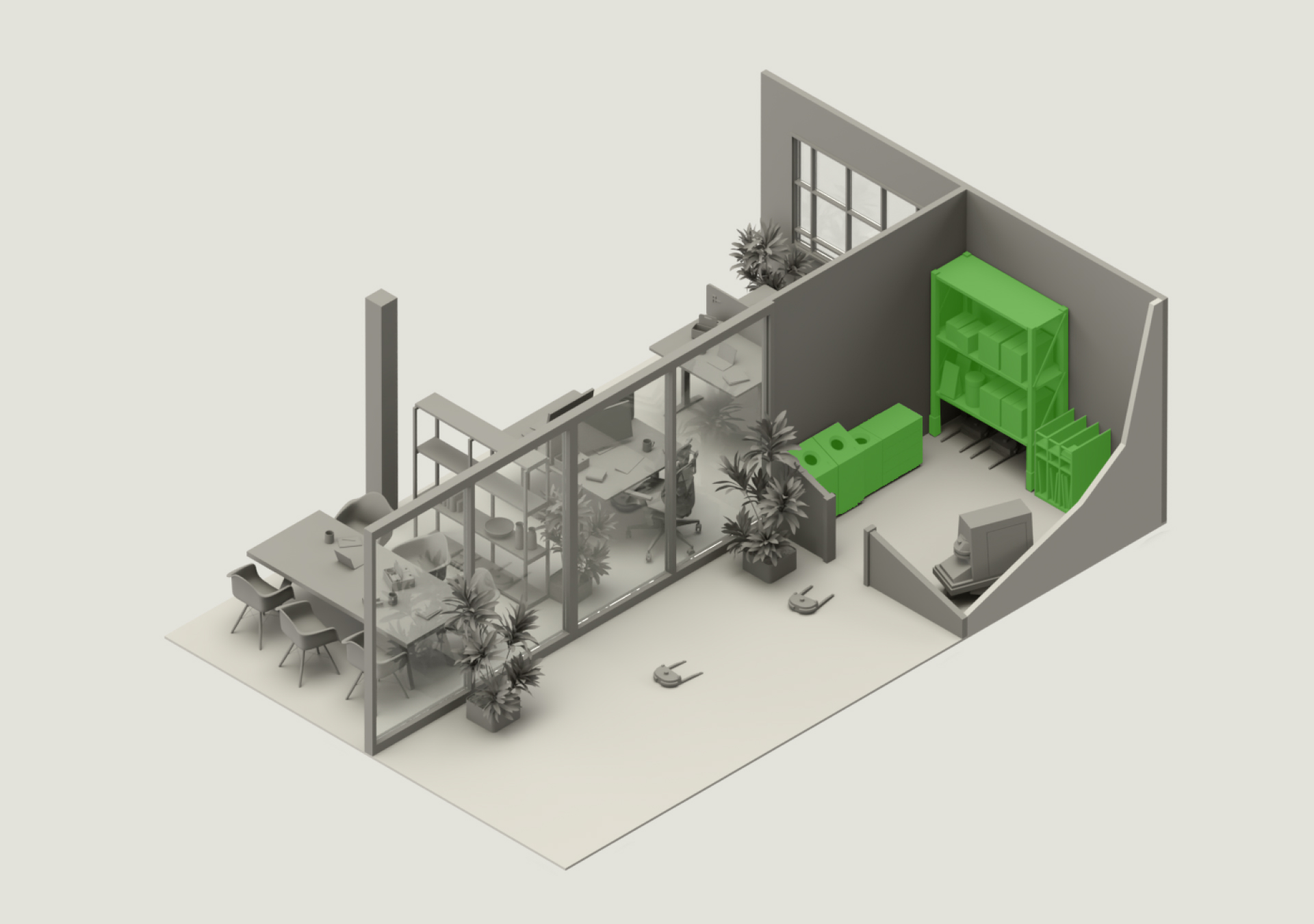
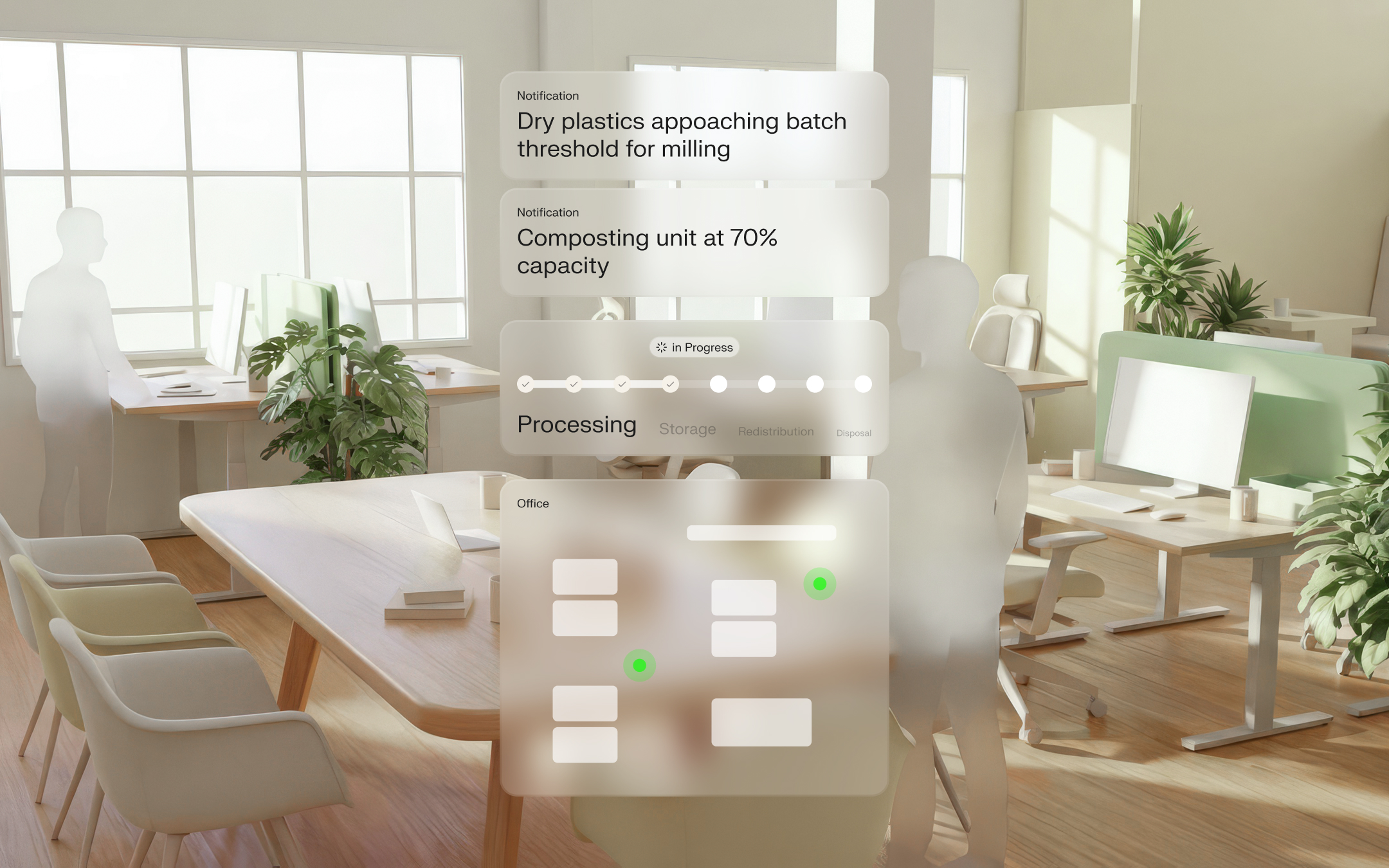
Instead of designing a single product, we designed a system. Starting from the idea of an intelligent trash bin, we developed a speculative yet feasible model for decentralized resource management in office environments. The concept combines spatial design, digital interfaces, data logic, and on-site processing to keep materials in use locally. Waste becomes a visible, measurable flow—sorted, stored, redistributed, and reintegrated instead of exported and forgotten.
The system is modular and scalable, designed to work with existing technologies rather than replacing them. It shifts the role of users from passive disposers to active participants—and reframes waste as a material with value, not a problem to hide.
Solution
Instead of designing a single product, we designed a system. Starting from the idea of an intelligent trash bin, we developed a speculative yet feasible model for decentralized resource management in office environments. The concept combines spatial design, digital interfaces, data logic, and on-site processing to keep materials in use locally. Waste becomes a visible, measurable flow—sorted, stored, redistributed, and reintegrated instead of exported and forgotten.
The system is modular and scalable, designed to work with existing technologies rather than replacing them. It shifts the role of users from passive disposers to active participants—and reframes waste as a material with value, not a problem to hide.
As a speculative project, the impact lies in changing perspective. The concept introduces a new mental model for waste: local, transparent, and actionable. It demonstrates how decentralized systems could reduce material loss, enable better data for sustainability reporting, and strengthen a sense of responsibility and ownership in everyday environments. The project has since been used as a discussion and thought-leadership piece—showing how circular economy principles can translate into spatial systems and real-world infrastructure.
Impact
As a speculative project, the impact lies in changing perspective. The concept introduces a new mental model for waste: local, transparent, and actionable. It demonstrates how decentralized systems could reduce material loss, enable better data for sustainability reporting, and strengthen a sense of responsibility and ownership in everyday environments. The project has since been used as a discussion and thought-leadership piece—showing how circular economy principles can translate into spatial systems and real-world infrastructure.
“Our goal wasn’t to design a smarter bin—but to question the entire system around it. Once waste becomes visible, local, and measurable, it stops being trash and starts becoming a resource.”
— Maximilian Mauracher, Circular Strategist